
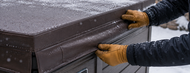
FiberCor Insulation and Winterizing Your Caldera Spa: What Owners Should Know
Posted by HTSS Team on Sep 7th 2026
FiberCor Insulation and Winterizing Your Caldera Spa: What Owners Should Know
Caldera spas are built with full FiberCor insulation surrounding the shell, and understanding what that material actually does helps explain why a properly maintained Caldera spa holds heat as efficiently as it does throughout the year, and what to pay attention to as winter approaches. This guide covers how FiberCor insulation works, how it fits into the spa's overall energy efficiency, and the winterizing steps that keep a Caldera spa running well through cold weather.
What FiberCor Insulation Actually Is
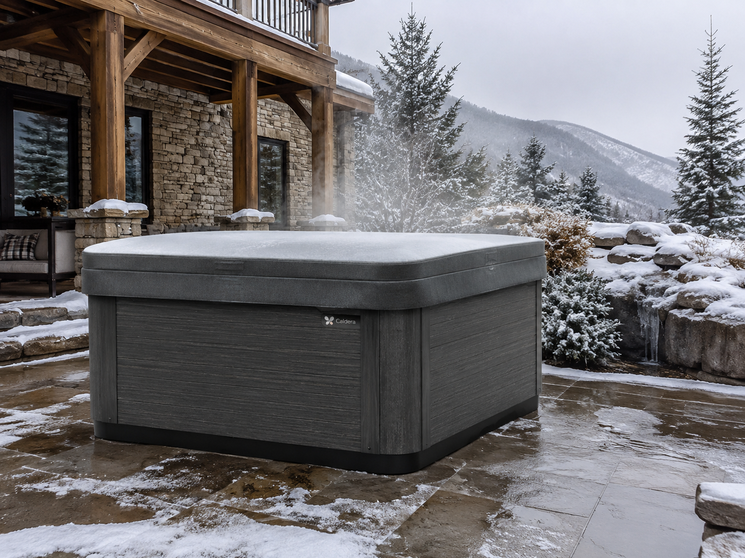
Most owners never see this insulation directly, since it sits between the spa's inner shell and outer cabinet, but its presence is exactly why a Caldera spa performs the way it does season after season.
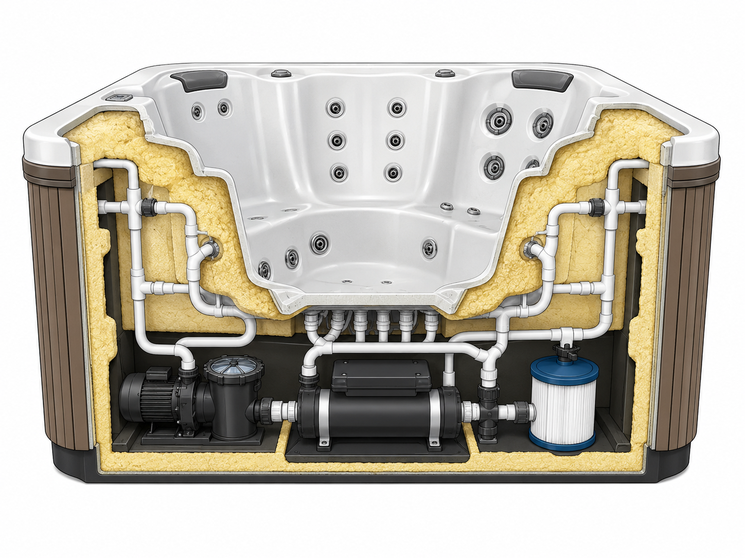
FiberCor is Caldera's full-coverage insulation material, applied at 2 pound density around the spa shell and plumbing rather than as a partial or perimeter-only insulation approach some other spas use. Full insulation means the heat generated inside the spa has fewer paths to escape through the cabinet itself, which reduces how hard the heater and pump need to work to maintain your set temperature. This is a passive, structural feature. It requires no maintenance on its own, but it only performs as designed when the rest of the spa's heat-retention system (primarily the cover) is also doing its job.
How Insulation and the Cover Work Together
FiberCor handles heat loss through the cabinet and plumbing, but the water's surface is where the majority of heat actually escapes on any spa, insulated or not. A cover in good condition seals that surface and completes the job FiberCor insulation starts. If your cover is aging, waterlogged, or no longer sealing tightly, even excellent shell insulation cannot fully compensate, since heat will simply escape upward instead. Thinking of insulation and cover condition as a single system, rather than two unrelated features, is the most useful mental model for understanding your spa's real-world energy performance.
Full Insulation Versus Partial Insulation Approaches
Not every spa on the market insulates the same way. Some manufacturers use partial or perimeter-only insulation, covering only certain sections of the shell or plumbing rather than the full cabinet interior. Full-coverage insulation like FiberCor addresses more of the potential heat-loss surface area, which generally translates to more consistent temperature retention and lower ongoing energy costs, particularly in climates with real seasonal temperature swings. The tradeoff of full-coverage insulation is that it can make certain plumbing repairs slightly more involved for a technician, since insulation surrounds more of the equipment than it would in a partial-coverage design. For most owners, the energy savings over years of ownership outweigh this minor tradeoff in occasional service accessibility.
How the Heater and Pump Fit Into the Overall Picture
Insulation and the cover are the passive half of a Caldera spa's energy efficiency. The heater and circulation pump are the active half, and both are designed to work with, not against, the insulation already in place. An efficient heater and a properly sized low-energy circulation pump do not need to run as long or as often to maintain temperature when they are not fighting constant heat loss through the shell. This is why a spa with excellent insulation but a struggling or aging heater can still show disappointing energy performance. The whole system, not any single component, determines the real-world result.
Why This Matters More in Winter
The insulation's job gets harder as the temperature difference between the water and the outside air increases, which is exactly what happens in winter. A well-insulated, well-covered Caldera spa handles that widening gap efficiently. A spa with a compromised cover or any gaps in the cabinet seals will show the difference much more starkly in January than it does in July, simply because there is more heat available to lose.
Preparing Your Caldera Spa for Winter
Inspect the Cover Before Cold Weather Arrives
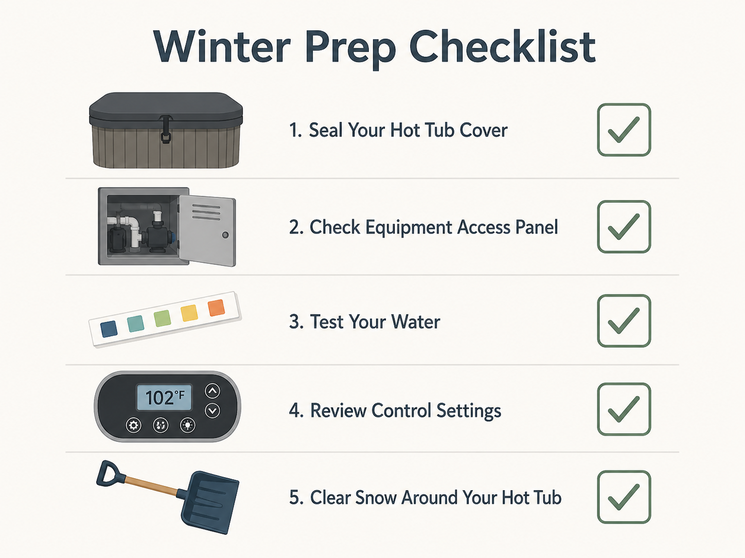
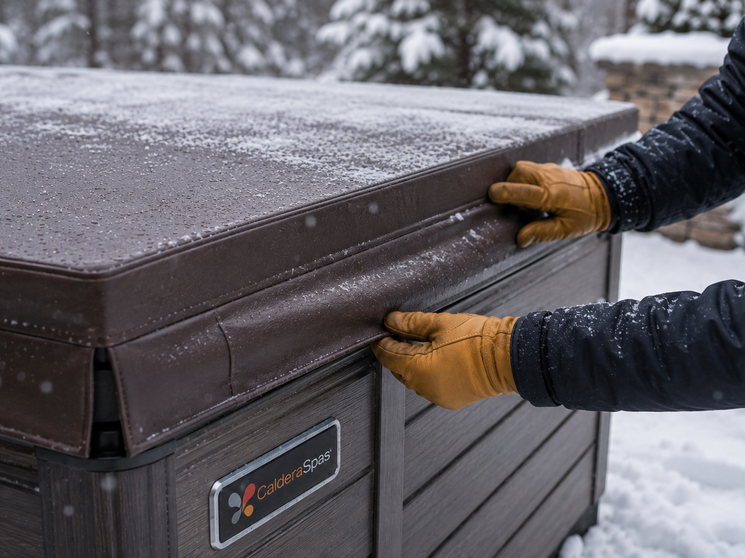
This is the single highest-impact winter prep step. Check for sagging, added weight (a sign of water absorption), and whether the cover still seals tightly along every edge. A cover that is even slightly compromised will cost meaningfully more to run through a full winter than a properly sealed one.
Check Cabinet Panels and Access Points
FiberCor insulation only works as intended when the cabinet itself is properly sealed. Inspect access panels for gaps or loose seals, since these are easy to overlook and can undermine the insulation's effectiveness in ways that are not obvious just by looking at the spa from a distance.
Verify Your Water Chemistry Is Balanced Before Cold Sets In
Cold water holds dissolved minerals differently than warm water, and starting winter with balanced pH and alkalinity makes ongoing maintenance considerably easier through the season, when you are likely testing and adjusting less frequently.
Confirm Freeze Protection Is Working
Most modern spa control systems include some form of automatic freeze protection that activates circulation if internal temperatures drop toward freezing. Confirm this feature is functioning correctly before the first hard freeze, rather than assuming it will simply work when needed.
Keep the Area Around the Spa Clear of Snow Buildup
Heavy snow piled directly against the cabinet can interfere with equipment compartment ventilation and make routine maintenance access more difficult. Keeping a clear path and a reasonable buffer around the spa through the winter makes routine checks easier and safer.
Running a Caldera Spa Through an Active Winter
Once winter prep is complete, day-to-day operation does not need to change dramatically. Maintaining a consistent set temperature rather than lowering it for short absences is generally more energy-efficient than repeatedly cooling down and reheating, since FiberCor's insulation is working to hold temperature, not fight against a cycle of temperature swings. If you plan to be away for an extended stretch, a modest temperature reduction is reasonable, but avoid dropping it dramatically, since that shifts more of the heating burden onto a single large reheat rather than steady maintenance.
What to Watch For If Efficiency Seems Off
If your energy costs climb noticeably beyond what seems reasonable for the season, the cover is the first thing to inspect, since it is both the most common failure point and the easiest to check. If the cover is confirmed to be in good condition and costs still seem high, check cabinet panel seals next, and consider whether the heater itself may need service, particularly if the spa is taking noticeably longer to recover temperature after use than it used to.
Frequently Asked Questions
Does FiberCor insulation ever need to be replaced or serviced?
No, it is a permanent structural component installed during manufacturing. The insulation itself does not wear out under normal conditions. What does need periodic attention is everything working alongside it, especially the cover.
How much does a compromised cover actually affect winter running costs?
It can be substantial, since the water surface accounts for the majority of potential heat loss on any spa. A cover that no longer seals well effectively works against the insulation built into the shell.
Should I lower my Caldera spa's temperature significantly during a winter vacation?
For a short trip, it is usually more efficient to maintain your normal set temperature. For an extended absence, a modest reduction is reasonable, but avoid a dramatic drop that requires a large reheat cycle when you return.
What is the most important winter maintenance task for a Caldera spa?
Inspecting and confirming your cover is sealing properly. It has the single largest impact on how well the spa's overall insulation system performs through cold weather.
Can heavy snow around the spa cause any real problems?
It can restrict equipment compartment ventilation and make routine access and maintenance more difficult. Keeping the immediate area around the spa reasonably clear is a simple, worthwhile habit through winter.
Does full-coverage insulation make my spa harder to service?
It can add a small amount of complexity for certain plumbing repairs, since insulation surrounds more of the equipment. For most owners, this is a minor tradeoff against the meaningfully better energy performance full coverage provides.
If my energy bills are fine, does the heater or pump still need attention?
Not necessarily. If temperature recovery after use feels normal and costs are reasonable for the season, there is no need to service components that are working as expected. Routine filter maintenance is still worth keeping up regardless.
A Caldera spa's FiberCor insulation is doing quiet, structural work every day, but it only delivers its full benefit alongside a cover that is sealing properly and a cabinet that is properly closed up. Handle those two things before winter sets in, keep the heater and pump running as designed, and the insulation built into your spa will do exactly what it was engineered to do through the coldest months of the year.